Have you ever heard someone say, "I can do whatever I want, it's my property!"? or "I moved to the county because there are no rules out here!"? That is a common misconception people have when it comes to the general sanitation of property. The State of Texas has laws that govern how property owners must maintain their property to protect public health and safety. Some of these laws are found under the Texas Health and Safety Code 341, 343, and others.
Violations can include tall grass, abandoned or junk vehicles, garbage, refuse, maintaining premises likely to attract rodents or mosquitoes, failure to maintain the septic system in good working condition, and many others. When a property is not kept in a sanitary condition, it may be classified as a Public Health Nuisance. In Victoria County, the department tasked with enforcing these laws is the Environmental Services, located in the Victoria County Public Health Department. To report a concern, you can contact Environmental Services at 361-578-6281.
When our department is informed of a complaint, an Environmental Health Inspector will investigate the complaint. The investigation involves visiting the property to determine whether a violation exists. As per Texas Health and Safety Code §343.024(a), "A county official, agent, or employee charged with the enforcement of health, environmental, safety, or fire laws may enter any premises in the unincorporated area of the county at a reasonable time to inspect, investigate, or abate a nuisance or to enforce this chapter."
After the initial investigation, if the complaint is valid, the Inspector will issue the violator a Notice of Violation. The Notice of Violation will state the violation(s) and give a time frame for the violator to abate the Public Nuisance. "Abate" means to eliminate or remedy by removal, repair, rehabilitation, or demolition. If the Public Nuisance is not abated within the given time frame, the Inspector will file this case with the court. If found guilty by the court, the charges can reach up to $200 per day for each day the offense continues. If you happen to receive a Notice of Violation, please contact the Environmental Health Inspector. Doing so can help clarify what the violation is and what is expected to be done to abate the public nuisance. According to the Texas Health and Safety Code, the person(s) liable for the Public Nuisance are the person(s) causing the violation and/or the property owner where the violation occurs.
You might think, "What's the big deal with tall grass or abandoned or junk vehicles in my yard?" The answer is that these conditions are not only unsightly but can also create health and safety hazards. Tall grass, weeds, and overgrown vegetation, along with abandoned or junk vehicles, can become breeding grounds for mosquitoes and provide shelter for mice, rats, and other vermin. If there is a septic system not in good working condition, this can cause offensive odors, ponding, and pooling, which attracts mosquitoes that can then transfer diseases to humans, and contaminate the groundwater in the area, not only for the homeowner but also the residents in the area. If you notice a problem, try speaking with your neighbor first; they may be unaware of the issue. If that's not possible, or if the situation needs further investigation, report it to Environmental Services by phone or through the department's website.
All Texans have a part to play in preserving our exceptional quality of life. By maintaining our properties and reporting health nuisances, we help protect the health, safety, and beauty of our communities. Thank you for doing your part to take care of Texas together, we can make a positive difference.
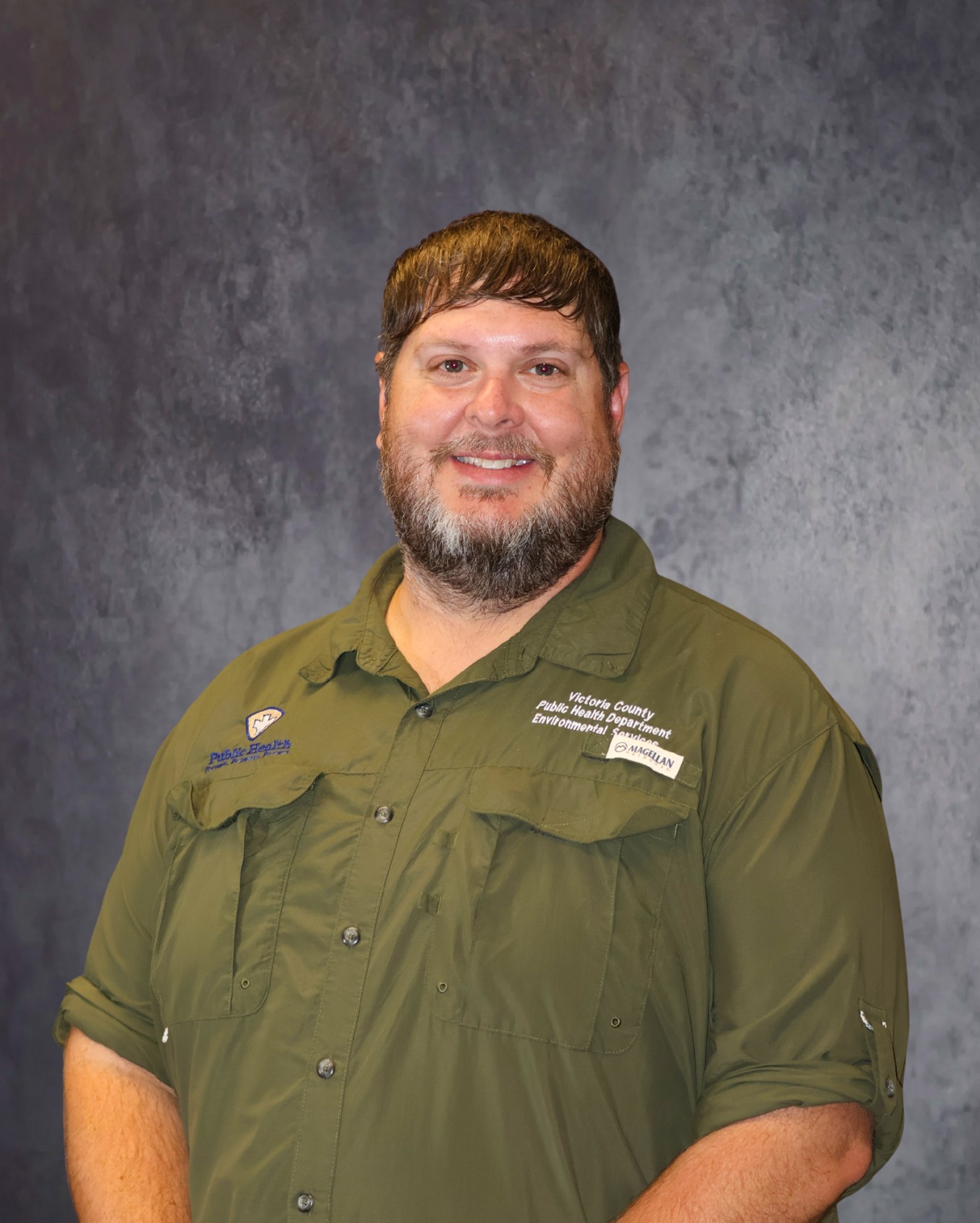
Scott Buchanan works for the Public Health Department in Environmental Services as the Stormwater Inspector. He has more than 15 years of regulatory experience in local government and plays a key role in ensuring compliance with environmental regulations and protecting local water quality.